

















Bricks Puzzle Game Guide and Tips
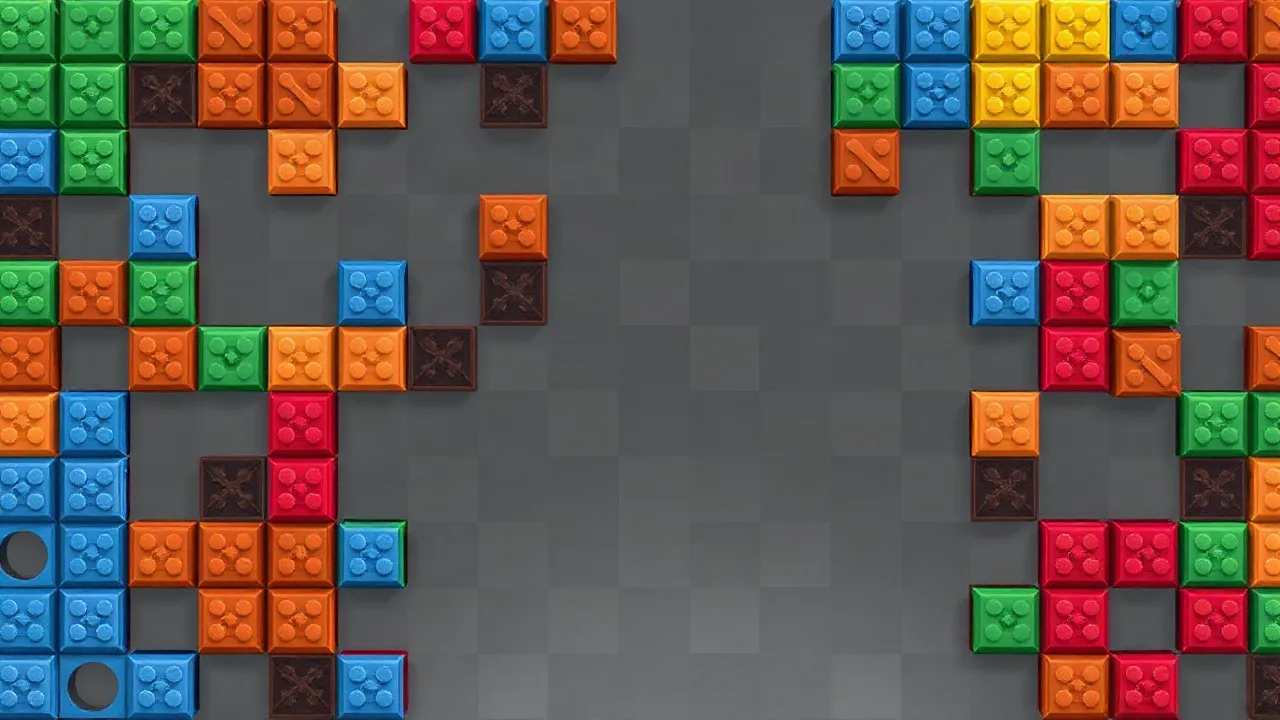
Bricks games are tile-matching puzzle games where players match colored bricks to clear the game board and progress through increasingly complex levels, efficiently clearing rows and columns to achieve the game's objective. This collection gathers titles built around that satisfying loop, where every move on the grid is a small decision with a visible consequence. Whether you have a few minutes or a longer stretch of time, the games here reward careful thinking as much as quick reactions.
Because each title handles the grid slightly differently, the collection offers a range of experiences. Some players may prefer a slower, more deliberate pace, while others enjoy rapid sequences of matches. Browsing the catalog lets you compare approaches and find a style that suits how you like to play.
Explore Bricks: A Tile-Matching Puzzle Collection
What Defines This Collection
The shared thread across these games is the grid-based board. Players match adjacent bricks of the same color to clear entire rows and columns, with the objective of clearing the board efficiently and clearing all bricks. That simple foundation supports a surprising amount of variety, since different titles may adjust how the grid fills, how quickly new bricks appear, or how the scoring responds to chain reactions.
Visitors exploring the collection can expect puzzle games that emphasize pattern recognition and spatial planning. The challenge usually comes from limited space and the need to think two or three moves ahead rather than from reflexes alone. That makes the collection approachable for newcomers while still offering depth for players who want to refine their technique.
Core Mechanics on the Grid
Effective bricks game strategy involves creating combinations of matching bricks to clear the board, utilizing the game's grid to plan and execute efficient moves. In practice, this means scanning the board for clusters, spotting opportunities to connect groups, and deciding which matches open up the most useful space.
Clearing rows and columns is often more valuable than simply making any available match. A well-placed move can remove a large section of the board at once, while a careless one may leave the grid crowded and harder to navigate. Players who learn to read the board as a whole, rather than focusing on a single area, tend to make faster progress.
How Challenge Typically Builds
As the collection includes games that progress through increasingly complex levels, the difficulty curve is a natural part of the experience. Early stages may give players generous space to work with, while later stages can introduce tighter grids or more varied brick arrangements. Specific mechanics vary by title, so the exact way difficulty shifts will depend on the selected game.
The common thread is that players must balance speed with precision. Rushing to clear bricks can fill the board just as quickly as it empties it, while overthinking each move can waste limited opportunities. Finding that middle ground is one of the more rewarding parts of the collection.
Choosing a Title from the Collection
When browsing the game library, consider what kind of session you have in mind. Some titles may favor quick rounds that fit into a short break, while others can support longer, more involved play where planning matters more than pace. Reading the individual game instructions before starting is a practical step, since the exact controls and objectives can differ from one title to the next.
Players may also want to look at how the grid behaves over time. Does the board fill gradually, or are new challenges introduced in waves? Does the game reward large clears, or steady, efficient play? These questions can help you pick a title that matches your preferences without needing to try every game in the collection.
Practical Advice for New Players
Effective player strategy in bricks games involves focusing on creating sets of matching bricks, utilizing the board's grid to plan and execute efficient moves, and maintaining a balance between clearing rows and columns to achieve the game's objective. A good starting habit is to look for matches that open up space rather than matches that merely remove a few bricks.
It also helps to avoid leaving the board in a state where only awkward, scattered matches remain. Keeping larger groups intact gives you more options on the next turn. Over time, these small decisions compound, and players who develop a habit of planning ahead often find the later stages more manageable.
Questions Players Often Ask
What is the main goal when playing these games?
The central objective is to clear the entire board by matching bricks, efficiently clearing rows and columns as you work toward that goal.
Are all the games in the collection the same?
No. While they share the tile-matching foundation, specific mechanics vary by title. The collection can include different grid behaviors, pacing styles, and challenge structures, so it is worth checking the details of each game before playing.
How should I approach a new game I have not tried before?
Start by reading the game's instructions, then focus on reading the board carefully before making your first moves. Early rounds are a good time to experiment with different matching strategies and see how the grid responds.