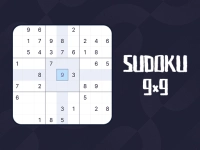










Sudoku games offer a puzzle-solving experience where players fill numbers in a grid to satisfy specific constraints, typically involving rows, columns, and possibly sub-grids.
Last Updated:
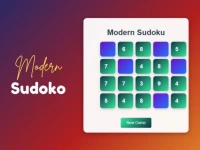
Core Structure of Sudoku games
Efficiently fill in numbers on a 9x9 grid such that each row, column, and 3x3 sub-grid contains the numbers 1-9 without repetition; this Sudoku game requires strategic thinking and problem-solving skills.
System Behavior
Sudoku games involve a static grid with predefined constraints, where players interact with the game by selecting numbers to place in empty cells; the game's core mechanic is based on the intersection of rows, columns, and sub-grids.
Practical Play Advice
Players should maintain a logical approach to Sudoku games, using elimination techniques to narrow down possible solutions and efficiently fill in numbers; regular practice can improve problem-solving skills.
Sudoku Games FAQ
Q: What controls are used to interact with Sudoku games? A: Players use a combination of selection and placement actions to fill in numbers on the grid. Q: What is the main objective of Sudoku games? A: The goal is to fill the grid with numbers that satisfy the constraints without repetition. Q: Are Sudoku games compatible with mobile and tablet devices? A: Yes, Sudoku games are typically available on mobile and tablet platforms with touch-based controls. Q: What is the central mechanic of Sudoku games? A: The core mechanic involves filling numbers in a grid to satisfy constraints based on rows, columns, and sub-grids.