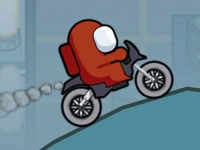
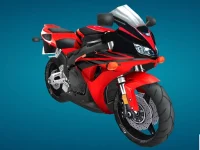
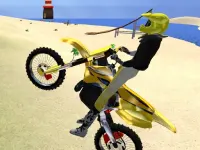
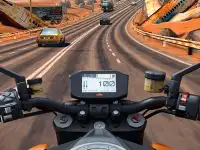
Moto games represent a specific simulation of two-wheeled vehicle dynamics within digital environments. Players typically assume control of a motorcycle avatar, executing acceleration and deceleration commands to navigate linear or open-world tracks. The primary objective involves reaching a designated endpoint efficiently while maintaining stability and avoiding collision with environmental obstacles or other vehicles.
Last Updated:
Core Structure of Moto games
Efficiently manage acceleration and braking inputs to navigate the terrain; Maintain vehicle stability throughout the course to reach the finish line.
System Behavior
Core mechanics rely on a physics engine that simulates weight transfer and traction limits during cornering and acceleration phases. Players must balance throttle application against lean angles to prevent the vehicle from sliding out or losing forward momentum. Standard gameplay loops involve navigating a series of checkpoints or completing laps within a specified time limit. Obstacles are introduced dynamically to test the precision of player inputs and the resulting trajectory of the vehicle.
Practical Play Advice
Effective gameplay requires anticipating upcoming terrain changes and adjusting speed before entering a turn rather than during the maneuver. Players should prioritize maintaining a stable center of gravity by coordinating lean angles with throttle modulation to prevent loss of control. Successful navigation depends on identifying the optimal racing line that minimizes distance while maximizing exit velocity from corners.
Moto Games FAQ
Q: How are the vehicles controlled? A: Players utilize directional inputs to lean and accelerate or brake buttons to manage speed. Q: What is the primary objective? A: The goal is to navigate the course and reach the finish line before time expires. Q: Can these titles run on mobile devices? A: Yes, the software is optimized for touch interfaces on smartphones and tablets. Q: How does the physics system function? A: It calculates real-time forces including gravity and momentum to determine vehicle handling.