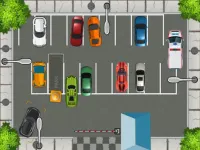
Browser-based arcade titles run on lightweight engines that deliver immediate access without installation or account requirements. A typical html5 games game loads in seconds and follows a short loop of repeated input responses and escalating difficulty. Players control a persistent object through a field of obstacles while tracking score and timing. The structure rewards consistency and reaction speed over long sessions.
Last Updated:
Core Structure of html5 games games
Locate the play button on the landing screen and start the session to begin the first run; Efficiently read the obstacle pattern and adjust position to maintain survival and raise the score.
System Behavior
The player controls a single object that moves through a scrolling field where obstacles appear at regular intervals. Speed increases as the session continues, which reduces reaction time and narrows the safe path through each html5 game. Scoring is tied directly to survival duration, with the counter incrementing each cycle the object avoids contact. Failure occurs on impact with an obstacle, which resets the run and returns the score to zero.
Practical Play Advice
Read the obstacle spacing two steps ahead rather than reacting to the nearest threat, which keeps movement deliberate and reduces panic inputs during dense sequences. Maintain a consistent rhythm when shifting position, because irregular timing forces corrections that consume reaction window and increase the chance of contact with an obstacle. Treat each reset as data: note which spacing pattern caused the failure and apply that observation to the next html5 games run immediately.
html5 games Games FAQ
Q: What controls are used? A: Movement is handled through a single directional input method mapped to the device. Q: What is the main objective? A: Survive as long as possible while avoiding obstacles to increase the score. Q: Does it work on mobile and tablet? A: Yes, the game runs in standard mobile browsers with touch support. Q: What is the central mechanic? A: Continuous obstacle avoidance with increasing speed over the duration of the run.