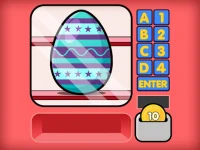
Egg games operate on a simple structural loop where players manage and interact with egg-based units across a bounded field. Core inputs focus on precise placement and timing while avoiding obstacles that disrupt the established rhythm of the session. This egg game genre relies on escalating difficulty curves and resource management where maintaining a stable sequence prevents failure states from triggering.
Last Updated:
Core Structure of egg games
Initiate the session and observe the field layout; Efficiently process incoming egg units by placing them into valid slots while monitoring the stability meter to prevent overflow.
System Behavior
The system behavior of egg games follows a predictable pattern where elements spawn at fixed intervals requiring immediate player input. Input actions trigger state changes that either resolve the current unit or advance the difficulty tier. Managing these egg collection game states requires balancing speed against accuracy to maintain system integrity. Failure occurs when the field reaches capacity or the stability meter depletes entirely.
Practical Play Advice
Focus on reading the spawn rhythm before committing to an action as this allows for better anticipation of the next unit type. Prioritize clearing central slots first to maximize available space for incoming items and reduce the risk of immediate overflow. Maintain a consistent pace that matches the current spawn rate rather than rushing as this egg game strategy prevents the stability meter from dropping too quickly.
egg Games FAQ
Q: What are the controls? A: Controls involve selecting and placing units into designated slots on the field. Q: What is the main objective? A: The objective is to manage incoming units without exceeding field capacity. Q: Is it compatible with mobile and tablet? A: Yes the interface adapts to touch inputs on mobile and tablet devices. Q: What is the central mechanic? A: The central mechanic involves placing units to maintain stability and clear space.