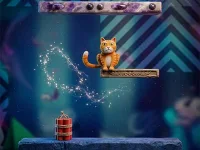
Cat games center on guiding a feline avatar through obstacle-laden environments using precise movement inputs and timing. Players navigate short structured sequences where avoiding obstacles and reaching endpoints form the primary gameplay loop. This cat game genre relies on tight spatial control and quick reads of platform layouts rather than complex menus or narrative systems.
Last Updated:
Core Structure of Cat games
To play this cat game Efficiently observe the path ahead then execute movement commands to clear gaps; execute jumps at platform edges to maintain forward momentum across obstacles.
System Behavior
Most cat platformer games define movement through horizontal traversal and vertical jumps across fixed terrain segments. Obstacles block direct routes and require timed jumps or pauses to bypass safely. Player input maps to continuous motion with acceleration applied until a jump or stop command is issued. Session pacing is governed by level length and obstacle density rather than external timers.
Practical Play Advice
Observe platform spacing before committing to a jump since mistimed inputs drive the avatar into obstacles below the intended route. Treat each obstacle as a timing gate and align jump execution with the edge of the platform to preserve momentum. Maintain consistent movement speed across cat game sequences because variable pacing often misaligns jump arcs with landing zones.
Cat Games FAQ
Q: What controls are used? A: Movement and jump inputs map to directional and action keys. Q: What is the main objective? A: Reach the endpoint of each sequence while avoiding obstacles. Q: Does it work on mobile and tablet? A: Yes touch controls map to movement and jump actions. Q: What is the central mechanic? A: Timed jumping across platforms to clear obstacles and gaps.